
Mizuno Corporation (Mizuno), a leading Japanese sports brand, has shown significant growth in its football business domestically and globally. In recent years, it has been focusing on developing the Southeast Asia market, with a particular emphasis on Thailand.
What strategies have been employed to penetrate the market in Southeast Asia, and how has Mizuno achieved success in the competitive football business? The author, a JSPIN advisor for the ASEAN region, interviewed Mr. SASAKI Takahiro from the Competition Sports Marketing Department, Athletic Business Division of Mizuno Corporation. (Written by KOYAMA Kei)
What was the trigger for Mizuno’s entry into the Thai market?
Since launching the Morelia football boots in 1985, Mizuno has been expanding its football business on a global scale. In 2017, we established a specialized football division dedicated with leveraging the product advantages of our football boots and started a strategic project to expand into overseas markets.
We chose Southeast Asia, particularly Thailand, as our strategic market after a thorough evaluation of growth rates, the presence of strategic local partners, and the enthusiasm for football. Our decision was informed by quantitative data from market research and the evident popularity of football in Thailand at that time. We aimed to rapidly enhance our brand recognition by having prominent national football players wear our football boots.
In 2017, as part of our mid-term plan for the entire company, we established goals to assert our presence in the Southeast Asian football market and then take on the challenge of the European market, where competition among international manufacturers is fierce. At that time, we did not know where to begin, so we took a trial-and-error approach, meeting various people and building local networks, which, in hindsight, has contributed to significant growth since 2021, both internationally and domestically.
What changed the Thailand employees' mindset towards the football business?
At that time, the local staff at authorized distributors of Mizuno in Southeast Asia might have been taken aback by the unexpected push from headquarters to expand the football business. I supposed they were wondering, “What’s this person up to?”
I felt that they might be annoyed at my unsolicited advice, but I was thinking about setting a significant, clear milestone that would motivate the local staff to proactively engage in expanding the football business. The pivotal moment arrived with the sponsorship contract with Thailand football superstar, Chanathip Songkrasin.
This contract demonstrated our commitment to the local staff in the football business in Thailand, which significantly boost their morale. The deal with Chanathip, which was one of our sponsorships, had an impact not only on the marketing effect, but also on the local staff’s increased enthusiasm for developing easier strategic plan, such as other strategy development, grassroots activities, and bolstered our sales efforts for our clients.
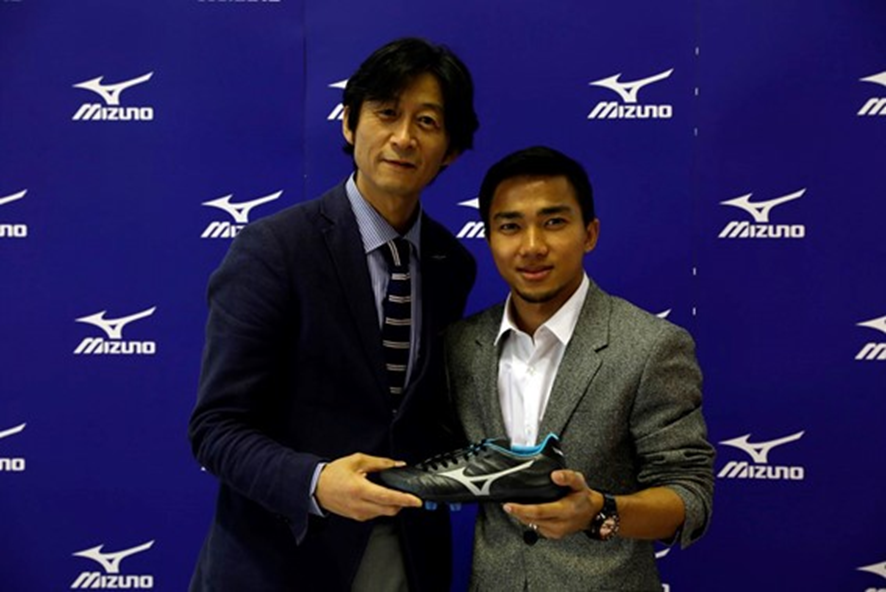
At that time, Chanathip was playing for Hokkaido Consadole Sapporo in the J.-League, making him easily accessible and our first choice for player sponsorship. Securing a sponsorship with Chanathip, Thailand's most popular footballer, paved the way for our Thai subsidiary to sign contracts with other national team players.
I am convinced that the fact Mizuno could sign a contract with Chanathip has transformed the mindset of our local staff. In our approach to the Thailand market, I have realized anew how crucial and challenging it is to align the mindsets of local staff and work together in unity.
What kind of marketing strategies were implemented in Thailand?
Thai market is well-known for the prevalence of low-cost imitations and counterfeit products. Amidst this, we established ourselves as a premium brand, leveraging our Made in Japan leather products’ fit as a differentiator. We began our marketing efforts by targeting football enthusiasts in the middle to high-income brackets with our high-priced offerings.
Another strategy was to have Chanathip wear different leather boots to Morelia to foster aspiration for our brand. We then introduced products in the mid- and low-price ranges, the largest market segment, to further increase sales. In retrospect, this strategy was well-tailored, and sales are going well.
Mizuno is expanding into other sports businesses in Thailand, such as running and volleyball, through contracts with authorized distributors. In 2018, we established a local subsidiary, which allowed us to instill greater brand loyalty among local staff, facilitating more comprehensive brand development that was not limited to specific sports or categories. As a result, we can easily expand casual products such as sneakers, which have helped our brand gain popularity in Thailand market. We have also established a subsidiary in Malaysia.
What was the reason for collaborating with J.League clubs in Thailand?
In our efforts to expand our business in Thailand, we had several discussions with J.League clubs with whom we had supplier contracts to explore potential collaborations. Although we did not have a contract with Hokkaido Consadole Sapporo, where Chanathip was playing at the time, we had more conversations with them through a number of grassroots activities and events in Thailand featuring Chanathip.
As a result of these events, we signed an official supplier contract with Hokkaido Consadole Sapporo from the 2021 season, which goes beyond a supplier deal and includes the prospect of business cooperation in Thailand and Asia.
We have continued to work with Consadole on joint initiatives in Thailand, such as grassroots and fan engagement events. Consadole’s goal is to gain more fans and increase loyalty in Thailand. We also hope that this collaboration will raise brand awareness and lead to increased sales.
As part of our differentiation strategy from foreign manufactures, we have prioritized 'try-on' experiences, which allow customers to experience the quality of our products firsthand. However, we had difficulty letting Thai people try on shoes because it is not customary in their culture. We attempted to create try-on opportunities by sponsoring youth tournaments, but it did not work.
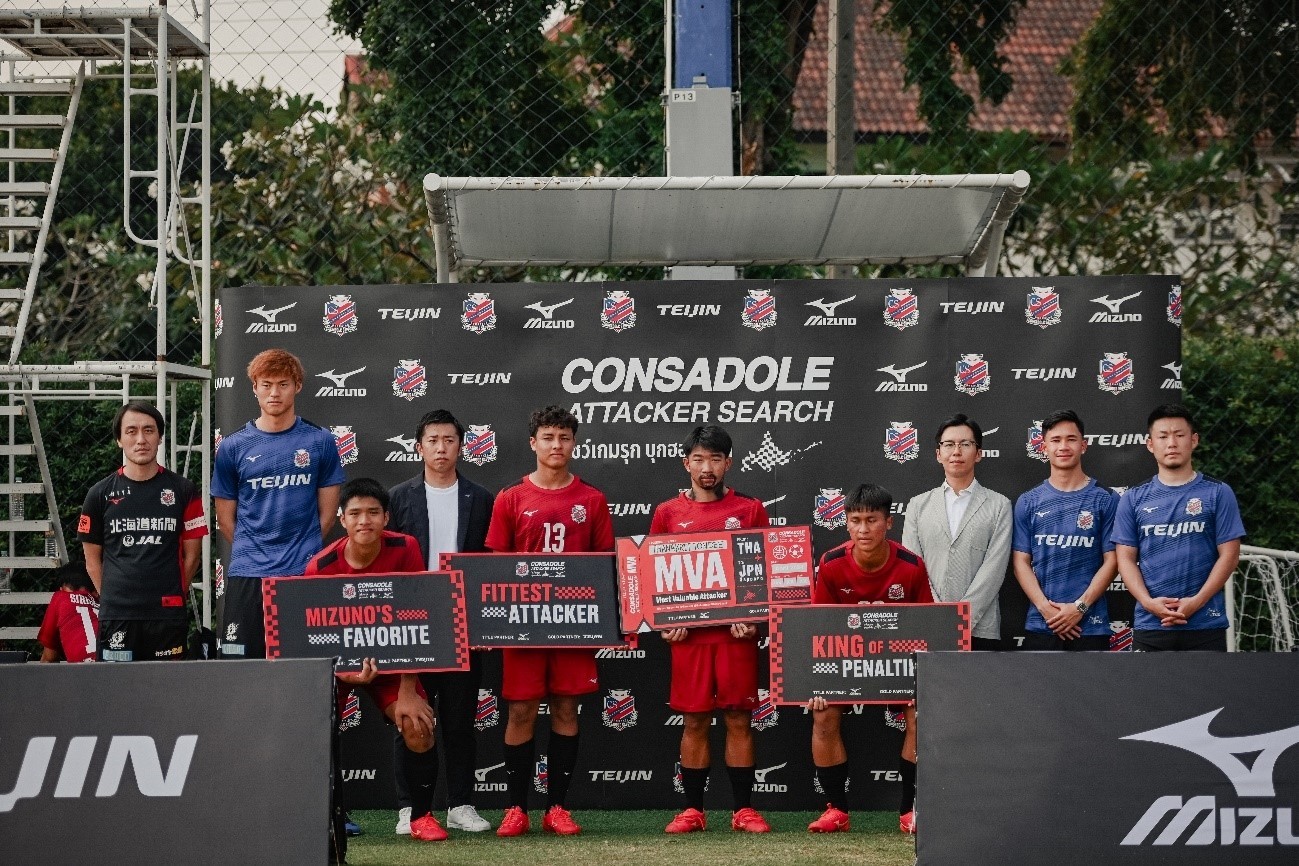
Under those circumstances, we and Consadole held football clinics and youth player selections in Thailand, providing participants with on-the-spot try-on opportunities to experience the quality of our shoes. We believe that collaborating with the J.League club to create such opportunities gives us a significant advantage.
We are also discussing collaborating with other J.League clubs to approach overseas markets, including Thailand and looking to expand into Asian countries such as Malaysia, Vietnam, and India by leveraging our superior products.
What would you plan to do in the Thai market in the future?
In Thailand, our brand recognition has grown, but our football market share remains around 10%. We hope to create an environment that enhances not only our brand awareness, but also usage among consumers in the most popular price range.
We also plan to engage more football enthusiasts and stakeholders. The next phase will be not only signing with players, but also working with clubs in the Thai League to further strengthen our presence in the Thai football market.
We are now entering the global market with significant strength thanks to our Made in Japan premium leather products. I believe; however, this alone will not be enough to expand our market share. We also plan to introduce more affordable products made overseas at the best time to expand our global market share.
Author's Insight
I am impressed at the impact on both external and internal marketing of the sponsorship deal with the Thai star player. The initiative of local partners and staff is crucial for Japanese sports brand or teams to attract fans in foreign markets. By signing with the most popular player in Thailand, Mizuno have demonstrated their commitment to the local workforce and set an example for other sports companies looking to expand globally through sponsorship.
If Mizuno, a Japanese brand, can build a fanbase, enhance brand recognition, and monetize in Thailand through cooperation with J.League clubs, it can serve as a successful model that can be easily replicated in other markets. Many young Thai footballers aspire to the J.League as a result of the success of Chanathip and other Thai players in Japan. I think the grassroots approach of working with J.League clubs has a different impact than signing with the major European clubs.
◇SASAKI Takahiro
Mizuno Corporation, Athletics Division, Competition Sports Marketing Section, Deputy Manager. He oversees Mizuno's global football business marketing and has been working to expand the football business in Southeast Asia such as Thailand since its inception. He supervises marketing for other competitive sports now.
◇KOYAMA Kei
Representative Director of FAR&EAST Co., Ltd. He played a key role in the l J.League’s Asia strategy and overseas business launch in 2012, as well as leading the J.League’s market development in Southeast Asia from the start. He founded FAR&EAST Co., Ltd. in 2022 and has been supporting sports organizations and companies with their business development in Asia and abroad. He is also a JSPIN Advisor for ASEAN region.
*Affiliations and titles are as of the time of writing in September 2024
Note: This article was originally published in Japanese on Nov 12, 2024. The original article can be accessed here.
- Column: Taking a Leap Forward on SDGs and Regional Revitalisation through a Unique Partnership between the International Federation and Fukuoka Prefecture - Volleyball Nations League 2024 Fukuoka [Part 2]
- Column: International Cooperation Through Water and Rugby: A Dual Approach Using Sports as a Gateway to Kenya[Part 1]